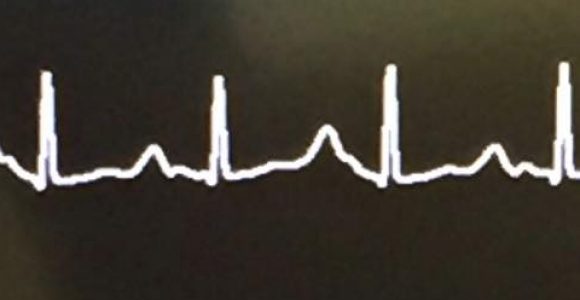

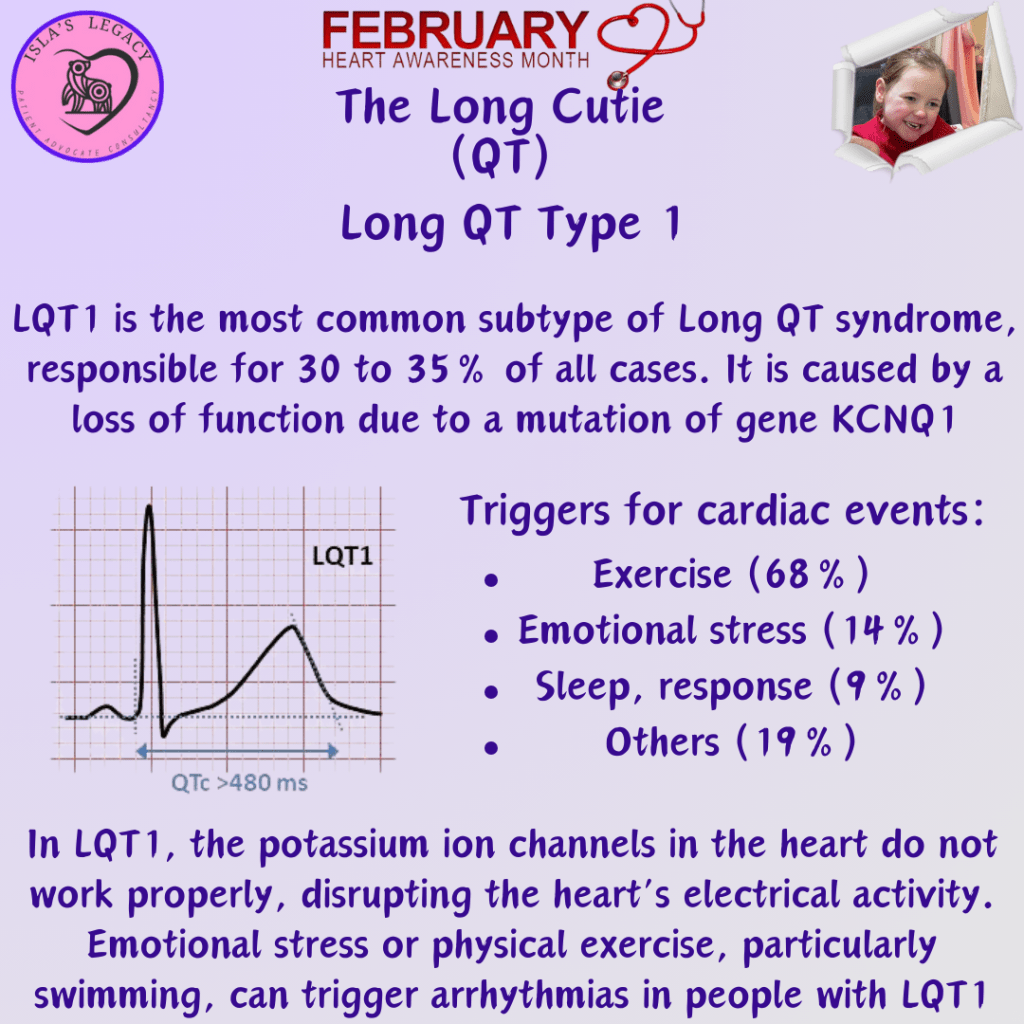
Long QT Type 1 (LQT1) is caused by potassium channels in the heart not operating as they should. Torsades de Pointes, the potentially fatal arrhythmia associated with Long QT Syndrome, is more common in Type 1 but the arrhythmia js also more likely to stop without treatment, making it less fatal. A variety of studies have shown that LQT1 is more frequently triggered by adrenergic stimuli (e.g., physical exertion or emotional stress) compared with other forms of LQTS, particularly by diving and swimming.
Approximately 25–36% of genetically positive patients with LQT1 may have a normal QTc range (defined as<440 ms) without any clinical symptoms at rest. Although these silent mutation-positive patients have a significantly lower risk of life-threatening cardiac events, it should not be assumed that they are safe from future events. Lethal arrhythmias can still occur in these apparently healthy silent mutation carriers without any warning, especially during emotional stress or physical exertion.
A lot of outdated literature still dominates the internet where exercising and swimming were ‘banned’ or not recommended for Long QT 1 patients. Thinking around this has changed in recent years and Long QT 1 patients are encouraged to exercise as long as they are well managed by beta blockers and take sensible measures as advised by their doctor on a case by case basis. For example, swimming is an activity where extra precaution should be taken – gradually submerging into water, not jumping into cold water which would cause a shock response, and not swimming alone.
 The Long Cutie